

Memory care in assisted living is specialized residential support for people living with Alzheimer’s disease or another form of dementia. It may be provided in a dedicated wing, unit, or neighborhood within a larger assisted living community.
Although memory care may share a building or campus with assisted living, the two are not identical. Memory care typically adds a more structured environment, dementia-informed support, safety measures, and activities adapted for people experiencing changes in memory, judgment, communication, or behavior.
Key Takeaway: Memory care may be located within an assisted living community, but it is a specialized program rather than simply a higher level of standard assisted living assistance.
What Does “Memory Care in Assisted Living” Mean?
Assisted living generally supports older adults who need help with daily tasks while encouraging as much independence as possible. Depending on the community, this may include help with bathing, dressing, meals, mobility, or medication routines.
Memory care is designed around the additional needs that can come with dementia. These needs may involve memory loss, confusion, communication difficulties, changes in behavior, and reduced ability to complete everyday activities safely.
A memory care program may be:
- A dedicated neighborhood within an assisted living community
- A separate wing or floor on a larger senior living campus
- A stand-alone residential community focused on dementia care
The terminology used by communities can vary. So can licensing requirements, admission criteria, staffing models, and available services. Families should therefore look beyond the words “memory care” and ask how the program supports residents in daily life.
For a broader overview of care categories, review Nest Beyond’s senior living options.
How Does Memory Care Differ From Standard Assisted Living?
The central difference is not simply how much help a resident receives. It is how the setting responds to dementia-related changes.
| Area | Standard assisted living | Memory care |
| Primary needs | Help with personal care, meals, mobility, medications, and daily routines | Daily assistance combined with support for memory loss, confusion, communication changes, and dementia-related behaviors |
| Environment | Designed to support independence and access to community spaces | Often designed with clearer navigation, monitored access, reduced hazards, and calmer surroundings |
| Daily structure | Residents may have flexible schedules and choose from general activities | Routines may be more consistent, with activities adapted to cognitive abilities and individual preferences |
| Staff approach | Staff support residents with everyday needs | Staff may receive additional preparation in dementia communication, redirection, and behavioral support |
| Supervision | Based mainly on physical and personal-care needs | May include closer monitoring related to disorientation, unsafe exits, or difficulty recognizing risks |
| Activities | Social, recreational, fitness, and educational programs | Activities may be adapted to encourage participation, familiarity, movement, and connection |
These are common distinctions, not guarantees. A community’s title alone does not confirm its capabilities. Families should ask what training, routines, safety practices, and levels of care are actually available.
What Services Are Commonly Provided in a Memory Care Unit?
Services vary by community, resident needs, state requirements, and the program’s care scope. Memory care may commonly include:
- Help with bathing, dressing, grooming, toileting, and mobility
- Meals and support with eating or hydration
- Medication assistance within the community’s permitted scope
- Consistent daily schedules
- Activities adapted for different cognitive abilities
- Support during periods of confusion, anxiety, or agitation
- Environmental safety features and monitored access
- Housekeeping, laundry, and maintenance
- Communication with families about changes or concerns
- Coordination with outside health professionals when available
Consistent routines may help reduce confusion and make daily activities more predictable. However, families should not assume that every memory care program offers continuous skilled nursing or medical treatment.
Ask which health and personal-care needs the community can manage, when outside providers are involved, and what changes could require a transfer.
Who May Benefit From a Memory Care Evaluation?
A person does not necessarily need memory care simply because they have received a dementia diagnosis. Needs vary significantly, especially during the earlier stages of a condition.
An evaluation may be useful when changes in memory or judgment begin to affect safety, personal care, or the family’s ability to provide consistent support. Examples include:
- Leaving a safe setting and becoming lost
- Forgetting to eat, drink, or take medications correctly
- Difficulty bathing, dressing, or using the bathroom without repeated guidance
- Frequent nighttime confusion
- Increased distress when routines change
- Difficulty finding rooms or navigating familiar places
- Unsafe use of appliances or household items
- Increasing falls or mobility concerns
- Care needs that exceed what family members can safely manage
- Caregiver exhaustion that affects the family’s health or the older adult’s care
Memory problems that interfere with daily life should be discussed with a qualified health professional. A medical evaluation can help families understand possible causes and current health needs.
A senior living assessment can then help organize questions about support, setting, and care level. No single behavior should determine the decision by itself.
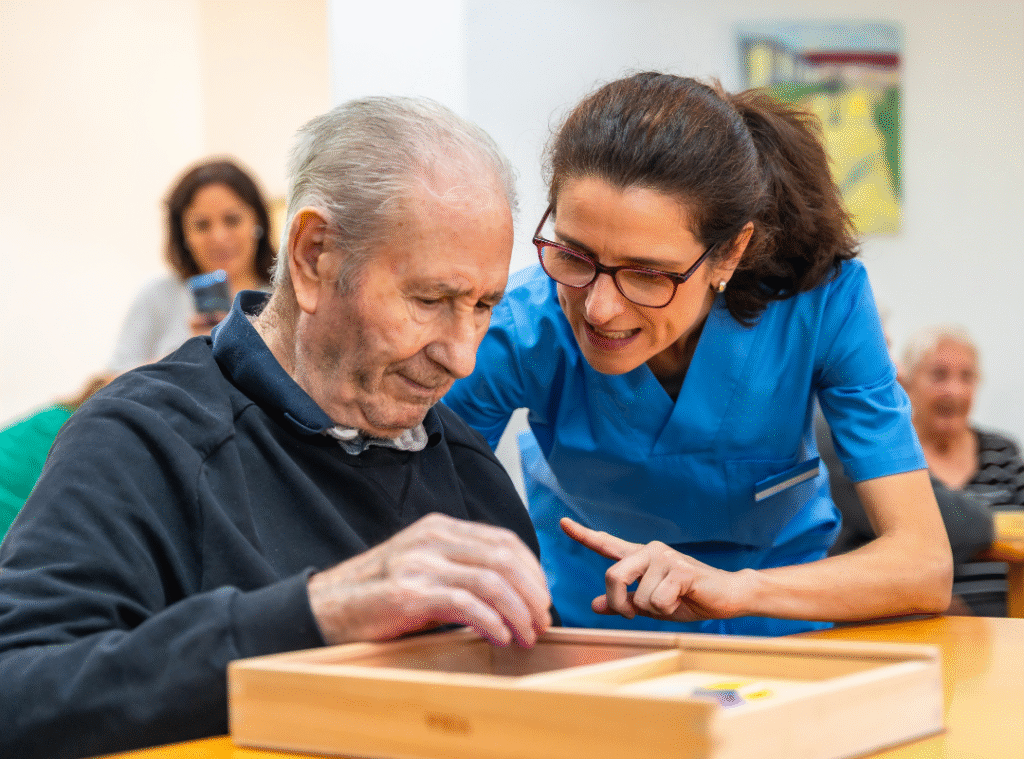
What Should Families Look for When Comparing Memory Care Programs?
A useful comparison should examine the program, the people providing support, the physical setting, and the individual resident’s fit.
Understand What the Program Can Support
Ask:
- Which diagnoses and care needs does the program accept?
- What personal-care assistance is available?
- How are routines adapted to each resident?
- How does the program respond to anxiety, agitation, or repeated questions?
- Are activities adapted for residents with different abilities?
- How are health changes communicated to families?
- What happens when a resident’s needs increase?
- Which conditions could lead to a transfer or discharge?
The answers should be specific enough to show how the program operates. Broad promises about compassionate or personalized care do not replace clear information about daily support.
Ask About Staff Preparation and Communication
Find out what dementia-related education staff receive and how often training is updated. Ask how team members respond when someone is frightened, confused, reluctant to accept care, or unable to explain what is wrong.
Families may also want to ask:
- Who is available overnight?
- How are changes in behavior or function documented?
- Who contacts the family when a concern arises?
- How are individual preferences and calming strategies shared among staff?
- How does the community coordinate with physicians or other providers?
Look Closely at the Environment
A memory care setting should make daily life easier to navigate rather than simply restrict movement.
During a visit, consider:
- Can residents find bedrooms, dining spaces, and common areas?
- Are signs, colors, lighting, and visual cues easy to understand?
- Is the setting calm without feeling empty or isolating?
- Are outdoor areas accessible and appropriately monitored?
- How are exits managed?
- Are there safe places for walking and movement?
- Do residents appear engaged in activities suited to their abilities?
- Are personal belongings and familiar items welcomed?
No physical design can eliminate every risk. The goal is to understand how the environment reduces avoidable confusion while supporting comfort, dignity, and meaningful activity.
Decide Whether the Program Fits the Individual
The best program on paper may not be the best fit for a particular person.
Consider the person’s:
- Current personal-care and mobility needs
- Communication style
- Sleep habits
- Food preferences
- Cultural or religious practices
- Social comfort
- Familiar routines
- Interests and abilities
- Medical needs
- Common causes of stress
- Preferred ways of receiving reassurance
Ask the community how these details would influence the resident’s daily routine. Also, ask how the program would respond if those needs changed.
For a more detailed look at this part of the decision, read what to look for in Alzheimer’s assisted living facilities.

How Can Families Prepare a Loved One for the Transition to Memory Care?
Moving into memory care can involve unfamiliar surroundings, new people, and a different routine. A person with dementia may need time to adjust, and families should avoid assuming that the transition will feel comfortable immediately.
Several practical steps may help:
- Share important health information. Provide current medications, diagnoses, allergies, mobility needs, and emergency contacts according to the community’s instructions.
- Explain the person’s routine. Tell staff about normal sleep patterns, meal preferences, hobbies, personal-care habits, communication needs, and situations that may cause distress.
- Describe what provides comfort. Familiar music, photographs, phrases, foods, objects, or activities may help. Ask which belongings are safe and permitted.
- Keep communication simple. Long explanations or repeated debates may increase distress. Use clear, reassuring language that matches the person’s ability to understand the situation.
- Ask what moving day will involve. The community may have recommendations about arrival time, room setup, family visits, and what to bring.
- Allow time for adjustment. Ask staff how the family will receive updates during the first days and weeks.
- Plan support for the family. Relief, grief, guilt, and uncertainty can exist at the same time. Caregiver support groups, counseling, or dementia education may help families manage the change.
Choose the Next Step Based on the Person’s Needs
Memory care in assisted living is best understood as a specialized layer of support, not simply a different room or a larger amount of general assistance. The right setting should reflect the person’s daily needs, dementia-related changes, safety concerns, preferences, and likely future needs.
Families who are still determining which level of support to explore can begin with the Nest Beyond care assessment. For additional help, contact Nest Beyond or call 866-622-4206.
Frequently Asked Questions
How does memory care differ from standard assisted living support?
Standard assisted living primarily helps residents with everyday needs such as bathing, dressing, meals, mobility, and medication routines. Memory care adds support designed for dementia-related changes, which may include more consistent routines, specialized communication approaches, adapted activities, closer supervision, and an environment designed to reduce confusion and safety risks.
What services are commonly provided in a memory care unit?
Common services may include personal-care assistance, meals, medication support, housekeeping, structured routines, adapted activities, environmental safety measures, and communication with families. Services vary by community, so families should confirm exactly what is included and which needs the program can manage.
Who may benefit from moving into a memory care setting?
Memory care may be worth evaluating when memory loss or changes in judgment begin to affect personal safety, daily care, navigation, medication use, eating, sleep, or the family’s ability to provide consistent support. A medical diagnosis alone does not automatically mean that a move is necessary.
What should families look for when comparing memory care facilities?
Families should compare staff preparation, communication practices, daily routines, safety measures, activities, environmental design, admission criteria, and how the program responds as residents’ needs change. The most important question is whether the program can support the individual’s current and foreseeable needs.
How can families prepare a loved one for the transition to memory care?
Families can share health information, routines, preferences, communication strategies, and sources of comfort with the care team. Familiar belongings may help when permitted. Families should also ask what to expect during the first days and weeks, and allow time for the person to become familiar with the new environment.