
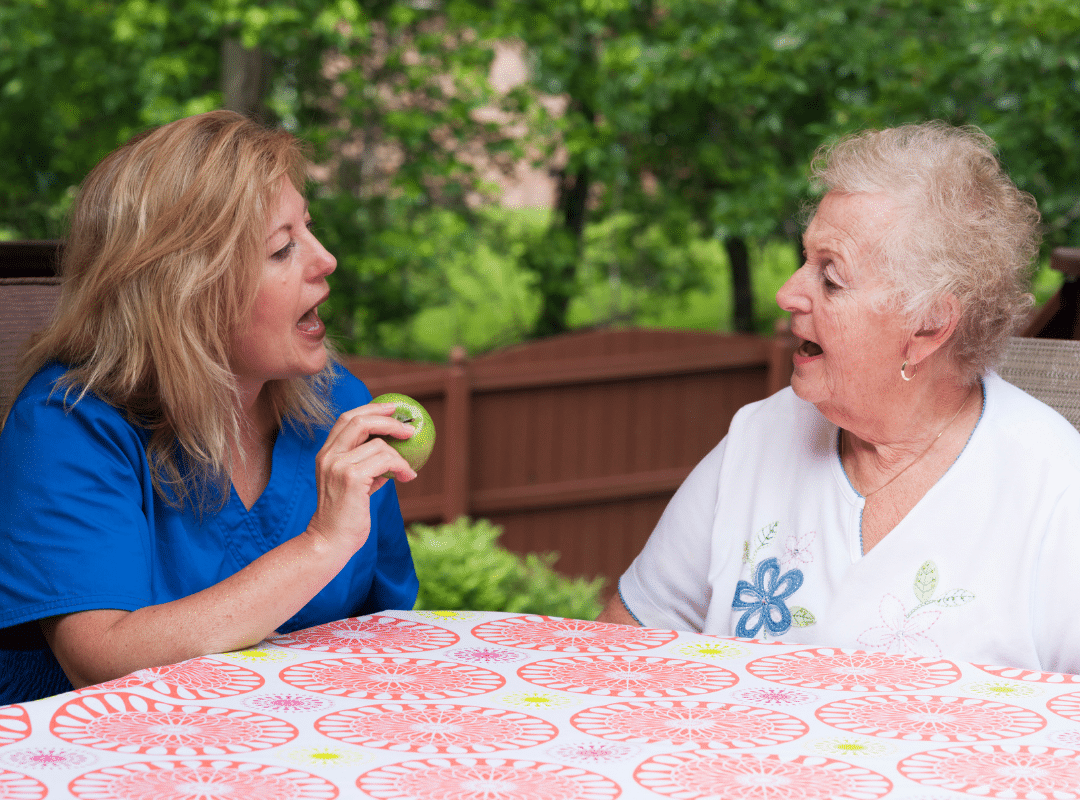
At NestBeyond, families navigating dementia often ask how to maintain meaningful communication when memory loss and cognitive decline start to affect daily interactions. The combination of speech therapy and dementia care offers a robust, compassionate approach that helps seniors stay engaged, confident, and connected to loved ones.
Through early intervention, personalized techniques, and structured support from trained speech-language pathologists, residents gain tools to express themselves more effectively. This not only enhances daily interactions but also fosters dignity, reduces frustration, and strengthens the bond between seniors and their caregivers.
Understanding Why Dementia Affects Communication
Dementia affects the brain’s language centers, which leads to challenges such as difficulty recalling words, following conversations, or expressing emotions clearly. These communication barriers can leave your loved one feeling misunderstood or overwhelmed, especially as symptoms progress.
That’s why the right combination of speech therapy and dementia care can significantly improve quality of life. By recognizing early changes in behavior, tone, or vocabulary, families and caregivers can adjust interactions and introduce meaningful tools that reduce frustration.
Caregiver education is also essential. By speaking slowly, using precise language, maintaining eye contact, and creating a calm environment, you help your loved one feel supported and respected.
For added support, families can explore other NestBeyond resources, including:
Each resource guides families through the many layers of senior support, ensuring they feel confident throughout the care journey.
How Speech-Language Pathologists Support Dementia Care
Speech-language pathologists (SLPs) are highly trained professionals specializing in communication, cognition, and swallowing—skills that often decline in dementia. Their expertise uniquely equips them to merge speech therapy and dementia interventions for measurable improvement.
Here’s how they support your loved one:
1. Strengthening Communication Skills
SLPs introduce dementia speech therapy activities designed to enhance language comprehension, recall, and conversational ability. Activities may include word association games, reminiscence storytelling, visual cueing, and conversational practice tailored to your loved one’s abilities.
These activities make communication more enjoyable and reduce frustration, allowing seniors to stay socially and emotionally connected.
2. Creating Personalized Dementia Goals
SLPs develop dementia speech therapy goals based on the individual’s cognitive level and personal history. These may include:
- Increasing comprehension of familiar words
- Improving the ability to express basic needs
- Reinforcing daily routines and safety conversations
- Maintaining conversational ability for as long as possible
Personalized goals help track meaningful progress and ensure the therapy plan evolves as cognitive changes occur.
3. Providing Tools for Alzheimer’s Patients
For those living with Alzheimer’s, speech therapy for Alzheimer’s becomes even more essential. Techniques often focus on simplifying communication, building predictable routines, and using memory aids such as photo cards, labeling systems, or communication boards.
These strategies strengthen recognition skills and encourage independence.
4. Empowering Family Caregivers
SLPs also train caregivers to reinforce therapy techniques at home. By practicing daily routines, using structured prompts, and supporting visual cues, caregivers help extend the benefits of therapy throughout the day.
Families can also explore NestBeyond’s helpful guides:

Tailored Techniques That Make Communication Easier
Dementia affects everyone differently, which is why tailored approaches work best. Here are common strategies used in speech therapy and dementia care programs at NestBeyond:
Cognitive-Communication Techniques
- Memory notebooks
- Categorization exercises
- Repetition and cueing
- Reminiscence-based conversations
These strengthen attention, recall, and processing speed.
Environmental and Sensory Adjustments
Small environmental changes can dramatically improve communication clarity, such as:
- Reducing background noise
- Using bold, high-contrast visual aids
- Playing soft, familiar music to support calm conversation
Daily Routine Support
Creating predictable daily routines helps individuals with dementia feel grounded. SLPs integrate dementia speech therapy activities into everyday habits—mealtime, grooming, morning wake-ups—to strengthen consistency and memory recall.
Families often combine therapy with engagement programs like NestBeyond’s
Fun Activities for Seniors to enhance cognitive stimulation and social connection.
Why Early Intervention Matters
Introducing speech therapy for dementia near you early—even before symptoms significantly worsen—has lasting benefits. The earlier the support begins, the longer your loved one can maintain essential communication skills.
Early Intervention Benefits
- Helps seniors stay engaged in conversations
- Reduces confusion and emotional frustration
- Slows communication decline
- Enhances daily independence
- Improves caregiver understanding
SLPs can also help identify swallowing concerns early, improving safety and reducing the risk of choking or aspiration.
To learn more about dementia progression, families can refer to trusted sources such as:
Navigating the Dementia Journey With Long-Term Support
The journey through dementia is emotional, complex, and deeply personal. Incorporating ongoing therapy ensures your loved one’s needs are continually reassessed and supported.
Ongoing care includes:
- Reinforcing dementia speech therapy goals
- Updating techniques as cognitive function changes
- Incorporating new dementia speech therapy activities
- Expanding caregiver training
- Encouraging consistency at home
NestBeyond continues to guide families through every step—from early symptoms to advanced stages—ensuring they never feel alone.
Visit us anytime at NestBeyond to learn more about programs, communities, and care resources.
Ready to Help Your Loved One Communicate With Confidence?
At NestBeyond, we understand how difficult communication changes can be for families facing dementia. Our expert speech-language pathologists, personalized care plans, and compassionate team are here to support every step toward better connection and improved quality of life.
If you want meaningful progress, reduced frustration, and a care team that treats your loved one like family, now is the best time to act.
📞 Call NestBeyond today at 866-622-4206
📧 Email us at info@nestbeyond.com
Let us help your loved one rediscover their voice—one conversation at a time.
Frequently Asked Questions
Do speech therapists work with dementia patients?
Yes, speech therapists work closely with dementia patients to support communication and cognitive functioning. They assess challenges such as word-finding difficulties, reduced comprehension, or trouble expressing needs. Through personalized treatment plans, they help patients improve or maintain communication skills for as long as possible. Speech therapists also guide caregivers on effective communication strategies to reduce frustration and enhance daily interactions.
What is the best care for dementia patients?
The best care for dementia patients combines personalized support, a structured environment, and compassionate supervision. This often includes memory care communities that offer specialized programs, trained staff, and secure settings tailored to cognitive decline. Care should focus on safety, emotional well-being, daily routines, and meaningful engagement. Family involvement and consistent communication with care providers are essential to ensuring high-quality care.
At what age is it too late for speech therapy?
No age is considered too late for speech therapy. Older adults, including seniors with dementia or age-related conditions, can still benefit from targeted interventions. Therapy can help maintain communication, improve swallowing safety, and support cognitive-linguistic abilities. Even minor improvements can significantly enhance independence and quality of life at any age.
What are the 10 warning signs of dementia?
The 10 common warning signs of dementia include memory loss affecting daily life and difficulty planning or solving problems. Individuals may also struggle with familiar tasks, become confused about time or place, or experience trouble understanding visual images. Other signs include new problems with words, misplacing items, poor judgment, withdrawal from activities, and noticeable mood or personality changes. Recognizing these early indicators helps families seek evaluation and support sooner.